

Anal sex
Navy blue
One of the cornerstones of the whole hanky code. Navy is the oldest, most widespread and most worn colour.
LeftTop – active
RightBottom – passive
A hanky code bandana is more than an accessory. Since the 1970s the gay and leather community has used it to say, without a word, what they are into and which role they play. Here you will find what each colour means and how to wear it.
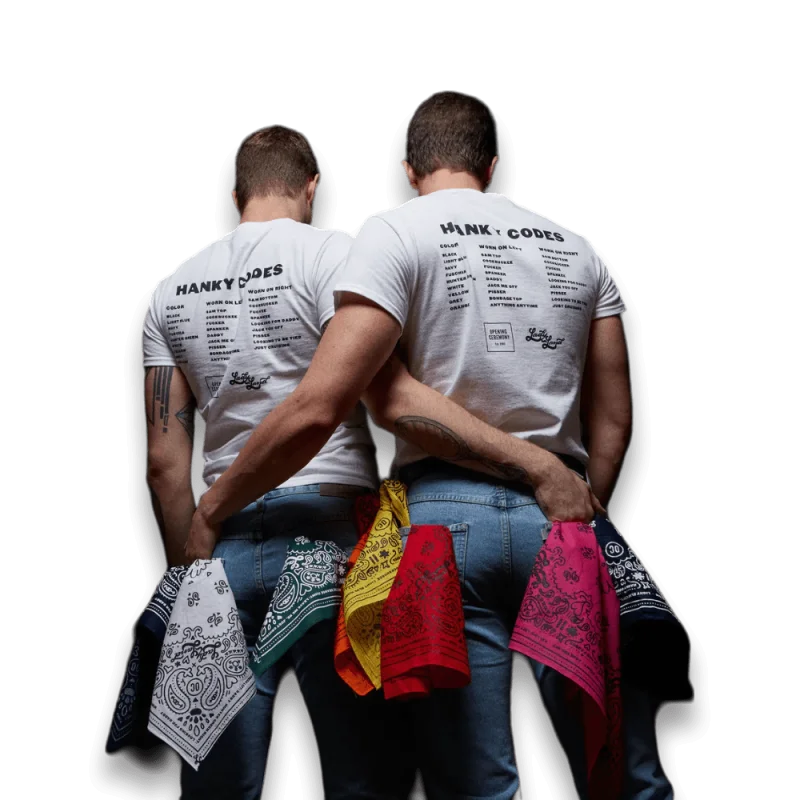
The hanky code is a system of coloured bandanas worn in the back pocket, around the wrist or around the neck. Each colour stands for one sexual interest or practice, and the side you wear it on tells which role you prefer. Left means the active, dominant or "giving" role – right means the passive, submissive or "receiving" one.
Left back pocket or left wrist: the active role. Top, dominant, the one who gives, leads and sets the pace.
Right back pocket or right wrist: the passive role. Bottom, submissive, the one who receives and lets himself be led.
A hanky around the neck, on the head or in both pockets: versatile (switch) – both roles. Or simply a bandana that looks good on you.
Click a colour to find out exactly what it means – or buy it right away.
One of the cornerstones of the whole hanky code. Navy is the oldest, most widespread and most worn colour.

One of the most popular colours of the code and, after navy, the most worn.

The colour of the leather scene. Black is one of the hardest and most respected colours of the code – leather, buckles, clear rules and a strong personality.
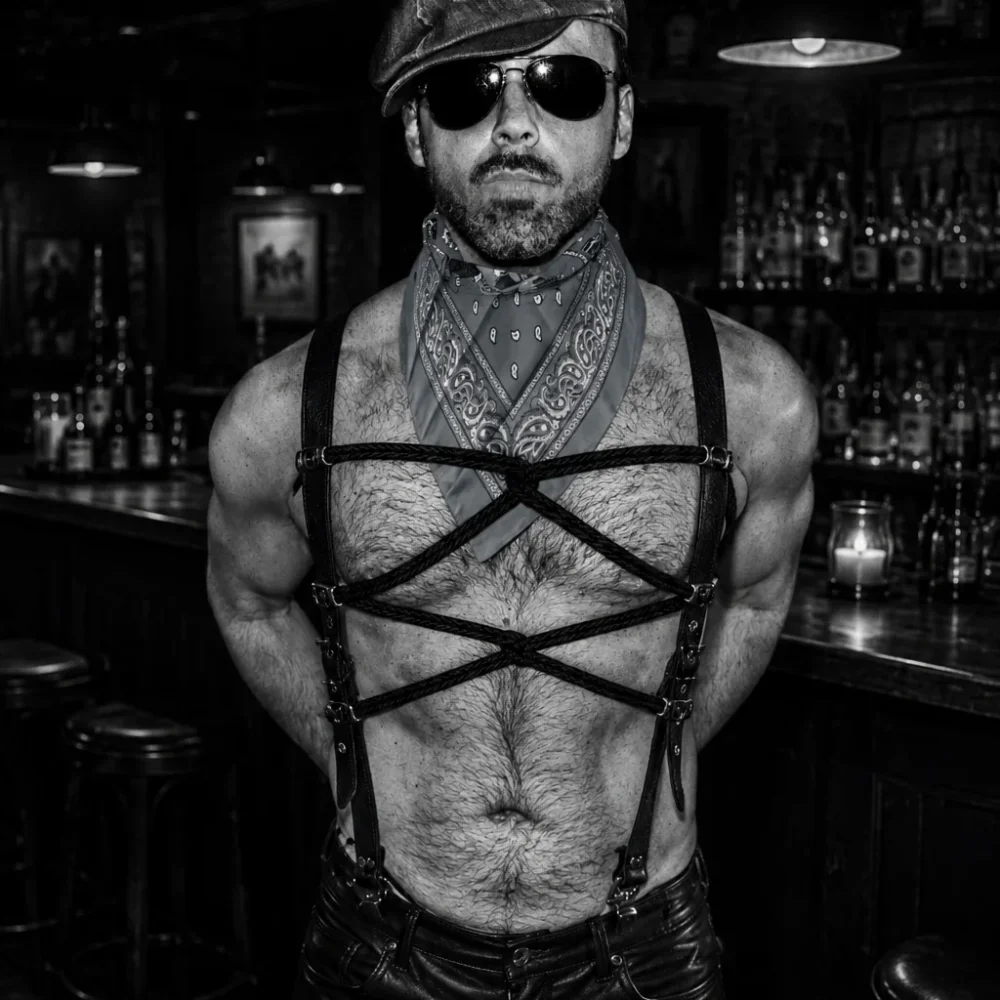
The colour of rope, knots and patience. Grey is for those who enjoy tying – or being tied – and who know the best things take time.

The colour of passion and one of the boldest in the whole palette – yet the most widespread today. Whoever wears red shows they know what they are doing.

One of the best-known colours of the code – for piss lovers. Yellow has little to do with sunshine and summer vibes; on the scene, though, everyone recognises it and no colour gets more jokes.

For adventurers who do not like boxes. Orange is the colour of openness, of trying new things and letting yourself be surprised.

For those who do not want to be like everyone else. Brown is one of the rarest and most niche colours of the whole code. Those who know, know.

For admirers of uniforms, military style and authority. Army, police or fire brigade – khaki is the colour of those who have a weakness for order and those who like to wear it.

The ideal choice to start with. White is the gentlest, most "vanilla" colour of the whole palette – and by tradition, worn on the right, it marks someone completely new to the scene.
The code has over thirty colours and patterns – from classic navy to leopard print. Find them all, with the meaning for the left and the right side, in one clear chart.
Full colour chartIt all started in the early 70s in the gay and leather bars of New York and San Francisco. One version says it began as a joke by a Village Voice journalist; others credit the Mr. S Leather store, which had a surplus of coloured bandanas and invented meanings for them. Within a few years bars were printing it on posters and Larry Townsend put it in his Leatherman's Handbook.
In the 80s and 90s the list grew to dozens of colours and patterns, some serious, some mostly for laughs. With the internet and apps the code lost its practical purpose but never disappeared – today it is part of leather and fetish culture and shows up at Pride and in fashion as a symbol of queer history.
The colour tells which sexual practice or interest the wearer is into, and the pocket tells the role: left is active (top), right is passive (bottom). Navy on the left is a top, navy on the right a bottom.
Left is top (active, dominant), right is bottom (passive, submissive). Mnemonic: "left is right, right is wrong".
Around the neck or on the head traditionally means versatile – both roles. Plenty of people wear it that way purely as an accessory with no signal at all.
At leather and fetish events yes, at least partly. In a regular club or on the street most people do not know it, or read it as a playful nod to queer history. It helps to know what your colour means so you are not surprised by who reads it.
It was born in the gay and leather community, but today the lesbian, queer and kink scenes use it too – with the same colours and their own variants.
Ten classic colours are in stock at PRASENÍ.shop. Classic 55 × 55 cm bandana, shipped via Packeta.
Bandanas are in stock and we ship them via Packeta all over Europe.
Buy at PRASENÍ.shop